What is an RC radio-controlled airplane?
An RC airplane is a flying machine that is controlled from the ground via a radio control. Manufacturers of these airplanes are constantly innovating to offer models that are increasingly maneuverable and easy to assemble, which contributes to the popularity of this toy.
In addition to the obvious pleasure it brings to fans of model aircraft and original toys, RC aircraft are also an excellent training tool for learning to fly. There are a multitude of different models to suit all profiles. We will try to guide you in choosing a simple and very stable model, ideal for beginners.
The different models of aircraft
| | Beginner planesBeginner planes are perfect for learning how to fly a radio-controlled plane. Their high wings are specially designed to offer maximum stability. They are available for purchase here. |
| | Aerobatic planesAerobatic planes are highly sought after by model aircraft enthusiasts, but they require experience and a certain level of flying skill. Their ergonomics and characteristics are chosen to free up the plane and allow for maximumaerial acrobatics. They are available for purchase here. |
| | JetsJets are fast and powerful aircraft, popular for high-speed RC racing. They are suitable for experienced pilots and are available for sale here. |
|
| Micro planesThese small aircraft are particularly suitable for beginners due to their low cost and the possibility of flying them in small spaces such as gardens or parks. They are available for purchase here. |
|
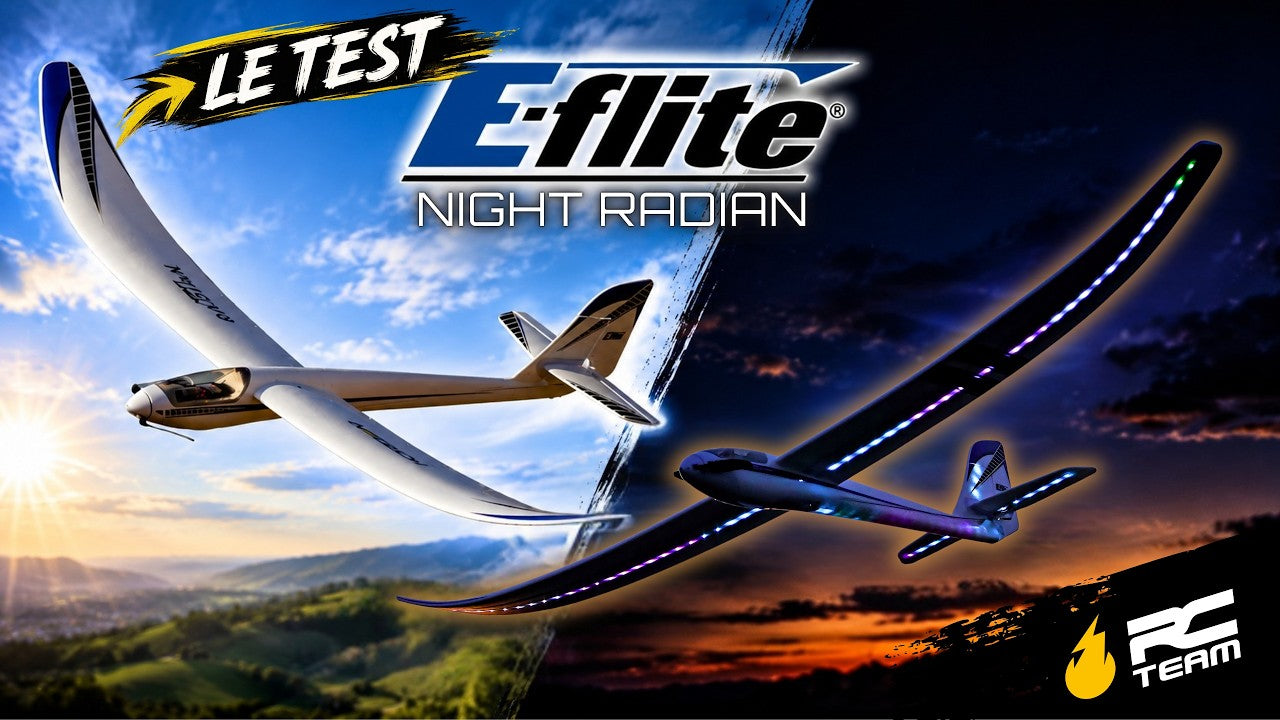
| glidersThese aircraft are miniature gliders. They use updrafts to fly effortlessly, either in Nitro flight or slope flight. They can be supplied with or without a motor and are available for sale at . . |
|
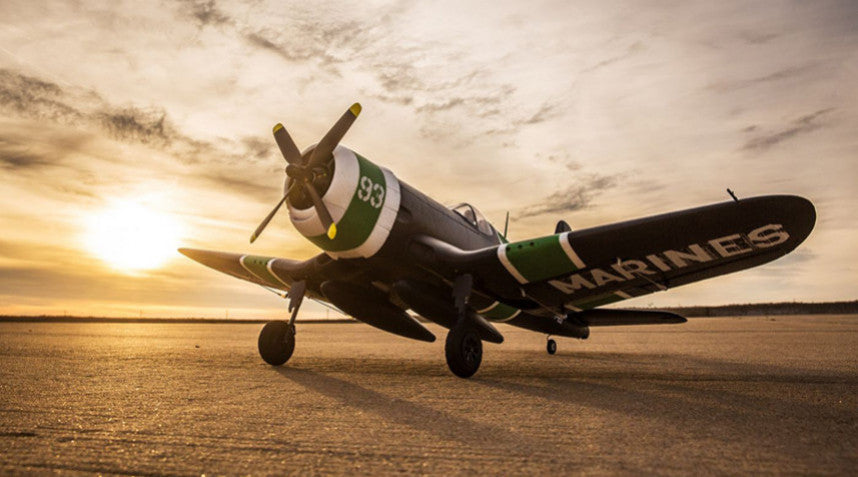
| WarbirdsWarbirds are scale models of authentic military aircraft. Many of these models are inspired by World War II aircraft. They are available for purchase here. |
|
| Flying wingsFlying wings are a very streamlined type of glider with no fuselage or tail. They are aircraft that use updrafts to stay airborne for long periods of time, saving as much battery power as possible. This type of aircraft is perfect for carrying a camera and taking aerial shots. They are available for purchase here. |


How do I choose my first aircraft?
Design
It's easy to be tempted by fast, flashy aircraft models, but when you're a beginner, stability is the most important factor. Your first flights require a very stable aircraft so you can get the hang of it and acquire the skills you need to fly faster aircraft.
Stability
As we mentioned earlier, the key word for amateur pilots is stability. We advise beginners to choose a high-wing aircraft. High wings are oriented upwards and give the aircraft greater stability.
Power supply
There are two types of power supply for an RC aircraft: electric or Nitro. Electric aircraft are less expensive, easier to maintain, and quieter, making them more suitable for beginners.
Number of
channels In model aircraft, the number of channels indicates the number of actions that can be performed via the radio control. For example, a 3-channel radio allows you to control the elevator, rudder, and throttle. Today, there are extremely complex radios with up to 16 channels. We recommend choosing a simple model with 3 or 4 channels.
Choosing the type of kit
You will find acronyms next to the names of the aircraft, such as BNF, RTF, PNP, and ARTF. These indicate the level of finish offered with the aircraft, allowing you to choose between a model that is almost completely assembled and ready to fly, or a kit that experienced pilots can customize. We recommend choosing a complete RTF kit (pre-assembled and complete aircraft) or a BNF kit (pre-assembled aircraft, but you must provide a compatible radio transmitter).

A
few things to know before your first flight
Radio frequency
Each radio communicates with the aircraft via a transmission frequency. It is important to check that you are not on the same channel as other pilots in the area, as this could cause an accident.
The simplest solution is to use aradio that operates at 2.4GHz. The special feature of this type of radio is that it scans the available frequencies and select a free channel to communicate with its receiver. This allows several radios to operate simultaneously without interference.
Direction
Your left and right are not the same as those of your aircraft. One of the peculiarities of model aircraft flying is the management of direction, which is relative to the position of the aircraft. For example, when your aircraft is heading towards you, your left will not be the left of the aircraft but its right. You must not lose sight of your aircraft or you will lose control.
Weather conditions
In model aircraft flying, as in aeronautics, weather data must be recorded before each flight, particularly wind strength and direction. If there is too much wind, your aircraft may be blown away! In general, we recommend flying your plane in light winds, early in the morning or late in the afternoon, when the sun is low.
What are the procedures for takeoff and landing?
Takeoff
To take off, position your plane with its nose pointing toward the horizon and hold it slightly below and in front of you. Launch it gently after a few quick steps.
Landing
To make a smooth landing, keep the plane facing the wind with its wings perfectly parallel to the ground, then reduce the throttle to allow your plane to descend gradually. Just as it is about to touch the ground, raise the nose by gently pulling on the radio stick.
To go further...
Today, there are comprehensive flight simulators available that allow you to learn to fly in the form of educational video games. They are available for purchase here.